by Mary Lauren Doggett, FNP-C

As a young woman in nursing school, not yet touched by the “real world” of nursing, I listened to a psychology professor tell my class a story that I’ve never fully appreciated until now. I want to share what I can remember of it here to set the context for this post. It has been more than 12 years since I heard this story, so my memory of it is most assuredly not 100% accurate, but my version will suffice.
A Life Well Lived
Long ago, the Master gave two young boys shiny new hearts. Each boy’s heart was untouched by the world, fully intact. Each heart had the same potential for love and life, and each owner had full control over their own hearts.
With time, the boys grew into men. They experienced various trials and triumphs through time. They interacted with those around them in their own ways. They had relationships with people and beings of all sorts: families, friends, neighbors and strangers, animals, plants and Earth herself.
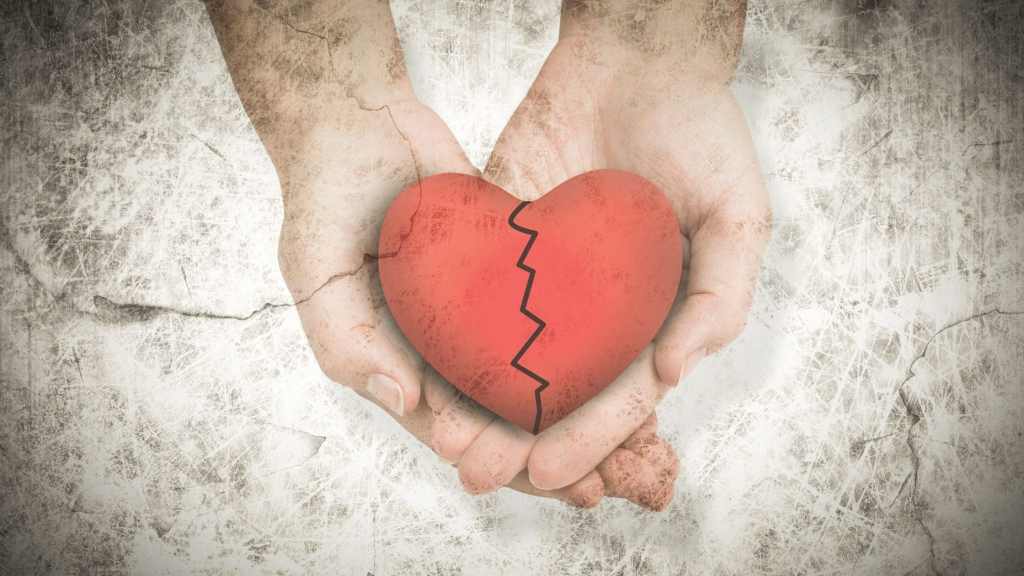
Eventually, the young boys became old men. At the end of their lives, their hearts were required of them. The first man returned his heart with pride. It still looked shiny and new- there were very few scars and no evidence of any real suffering. The edges of the heart were smooth, its muscles still strong and vigorous. It was obvious he had taken great lengths to protect his heart throughout his life. He stepped forward boldly, head held high, returning his nearly perfect heart with confidence. There was no reply from the Master who received it.
The second man stepped forward feebly, with his old heart held gently, but clumsily, between his hands. This heart was much different from the first man’s heart, for it was a heart that had obviously endured much. It was swollen and scarred, dripping with blood and torn in places. There was not an inch of tissue that had not been injured and patched. The edges were worn and frazzled. With his head bowed low, the man returned the heart to his Master, sure that it would be rejected in this condition.
Both men, however, were stunned to hear the Master say, “Well done, my good and faithful servant” to the second man with the dilapidated heart.
With tears in his eyes, the second man looked up in question to his Master, not sure how to respond, for he was ashamed that he had not taken better care of his heart.
The Master said softly, “You, dear son, have returned the perfect heart. You have used it well. Each scar and tear represents a burden you chose to bear for another. Each blemish and irregularity is evidence of a man whose life was full of giving to others. Each missing piece is a piece of your own heart that you gave to another with each kindness you showed. You are tired, my servant, but now you will find rest because you have reached the end of a life well lived.
The heart with no scars or wear is a heart wasted. We each are given one life only to live. What have we at the end of our life if we have done nothing to serve others? We have only the effects of our self-preservation, at the base of which is self.”
When I reflect back on this story now, I appreciate so much that psychology teacher who saw fit to share it with us. At that time, I had no idea that about 12 years later, I would be a Nurse Practitioner working in the field of Palliative Care and Hospice.
My journey in nursing started as a nursing aide in a local long-term care facility while I was still in high school. I didn’t realize until much later how much of my heart I left there with those residents who I came to know and love so well. I will never forget the first time I provided post-mortem care to a patient. She was a very small, German woman. She had COPD and struggled quite a long time before she passed. Her only living family was, quite literally, about a world away. She was anxious because she didn’t want to be alone, so I held her hand as she died. I can still feel that scar on my heart.
Later, after graduating nursing school, I worked in a very busy level 1 Trauma emergency department. The things I learned and the patients I met in that ER have stayed with me, and I have no doubt that my heart is now the proud owner of several scars that resulted from “injuries” I received while working there. I did more CPR there than I care to remember, including on a few pediatric patients -*-(which is where I learned, without a doubt, that the specialty of pediatrics is most definitely for someone else). I have put my heart back together after many a night shift full of suicide attempts, unexpected deaths due to car accidents and gunshot wounds. The pieces certainly don’t fit perfectly back together, and they never will. But we stitch them back together and we move on, right?
After about two years in the ER, I went to an intensive care unit, where I met and worked alongside Dr. Maura Lipp, another contributor to this blog (shameless plug here- go check out her stuff!) During my three years in that ICU, I learned more than I ever learned in any formal education arena. The patients I used to work like a maniac to stabilize just long enough to “get them to the unit” became my patients. I had to combine the ability to quickly assess and triage that I had learned in the ER with the intricate, pain-staking thoroughness that only a true ICU nurse can appreciate. As one of my favorite ICU mentors put it- they had to “scrub the dirt off of me” that I’d picked up in the ER trenches before they could mold me into the ICU nurse I needed to be. Don’t be angry by that statement, my fellow ER peeps. She was an old ER nurse, too. She said the best ICU nurses started in the ER because there’s “no one else like an ER nurse.” But that’s another blog for another day. The things that happened to my heart in that ICU I’m not sure I can put into words. I grew as a person there, not just as a nurse, because I was surrounded by the very best specimens of humanity in this world.
It was during my time in ICU that I decided to take my education further and become a nurse practitioner. I obtained a Master’s degree as a Family Nurse Practitioner and then went to work for a busy family practice in my small hometown. Even after graduation, I don’t feel like I ever really completely left the ICU. Even now, if I close my eyes, I can immediately transport myself back to that time with those people. My heart swells with pride for that time in my life.
Perhaps It Was Fate
Fast forward to my time as a primary care provider. Many of those patients I saw on at least a monthly basis for three years. If I didn’t know them already (remember, I said small hometown), I came to know them well. Some of them became like family to me. As my husband and I had more and more kids (ok I only have four children, but it feels like forty-four some days), I decided to leave the job with more rigid hours for more flexible options.
I did some long-term nursing facility work for a while before fate led me to stumble upon an opening for a Palliative Care Nurse Practitioner position. During the initial interview, I found out that my supervising physician would be none other than my previous colleague, Dr. Maura Lipp. And so began my journey into the world of end-of-life care, and there I’ve stayed.
A Keeper of Secrets
When I consider the two men in the story at the beginning of this post, I can’t help but think about all the ways we as health care providers damage and change our own hearts in our interactions and relationships with our patients. Sometimes it is willingly, sometimes it is not. I would dare say that usually it is even worth it.
But I think in the specialties that deal most often with end-of-life care, like palliative care and hospice, we have to consider the problem of setting boundaries with our patients. How do we process and manage the very BIG emotions that come with caring for patients we know will ultimately die in our care?
As humans, we feel. We have empathy and sympathy, sacrificing our humanness for professionalism isn’t always possible, no matter how we try.
The program in which I currently work is a home-based palliative care program. My appointments take place in the patient’s residence; home can be a trailer, a skilled nursing facility, a hotel room, an assisted living facility, a mansion, a suburban neighborhood, government housing, or even an RV. I’ve met with patients in garages, parking lots and she-sheds. I’ve taken care of neighbors, friends, strangers and colleagues.
In palliative care, we get to know our people. I mean REALLY know them. When I worked in a primary care clinic, my patients told me about their crazy neighbors and their pet iguanas. In palliative care, I get to actually meet them. In the comfort of my clean and warm primary care office, I helped identify rashes by guessing which insects caused them. In palliative care, I get to see the offending parasite up close and personal (i.e., bed bugs, fleas and lice) in the patient’s living room or bedroom.
I learn which couch to sit on (not that one, that one’s for Fluffy, the dog), which rock to look under to find the key for the back door, and which day I can’t come become they’ll be in dialysis that day. I know I can’t come to see Mrs. Smith at 1 o’clock because she won’t answer the door if “Days of Our Lives” is still on. I know who has a dog that bites, and I know which treat to give the dog so that he doesn’t bite me… again.
I get to facilitate conversations about assigning a power of attorney over healthcare between previously estranged siblings. I get to hear my patient’s greatest fears (“I can’t die before my grandson graduates”), greatest regrets (“I should’ve gone to Italy when I had the chance”) and deepest joys (“I met my new baby niece yesterday”).
I get to hear about their childhoods, the early years of their marriages and how long it took them to quit smoking for good. I know which daughter gets the patchwork quilt, and I have to make sure she doesn’t get it until AFTER the patient dies because there’s a note for her sewn in the corner.
They tell me things they’d never say to even their closest loved ones (“I’m ready to die, but I know they’re not ready yet.”) and they ask me to say the things they can’t (“Your mother shared with me that she’d rather die at home than at a hospital”).
I am a keeper of secrets. I am a bringer of paper towels because they ran out, and I’m a phone call to the doctor’s office because they lost the number. Again.
More than their NP, sometimes I am their person. There have been times when I am the ONLY person they’ve seen all week.
So how do we cope with that? How do we, as humans, set enough boundaries that our hearts aren’t annihilated with every death?
How do we pick up the pieces, put them back together into some semblance of a heart without causing too many callouses and losing the ability to feel at all?
Tending To Our Own Hearts
While the idea of self-care does hold some merit for me, I sort of hate the cliché “you can’t pour from an empty cup.” I don’t know why, but it just feels…..lacking. It’s not as simple as pouring yourself out at work, home or whatever, and then taking a hot bath or reading a book by candlelight to “refill” and keep going. Sure, those things feel nice, but when you get right down to it, it’s just not sufficient.
There needs to be more awareness and training around the seriousness of burn-out, depression and anxiety in reference to health care workers. I do think we have come a long way in removing the stigma surrounding utilization of psychotherapy and counseling for patients, but there’s not enough emphasis on utilizing these options for the healthcare providers themselves.
We as health care providers need to get better at heart maintenance, and I don’t mean the cardiac rehab variety. I mean the psychological, emotional and spiritual care that we so often neglect to include in our own lives.
I certainly don’t know all the answers, but I do know that we have to allow ourselves to get the help we need, too.
Seek counseling. Read books about grieving for yourself, not just for your patients and families. Debrief with your team. Join that support group on social media. Pray and seek spiritual growth. Whatever you do, do something that will enable you to continue in this most honorable work in the most healthy condition possible. We are needed, but we have our own needs.
I look forward to the day when I get to hand over my beaten up, scarred heart to the Master. It will be evidence of a life well lived.


 Palliative Life
Leave a reply to Sarah Hunter Cancel reply