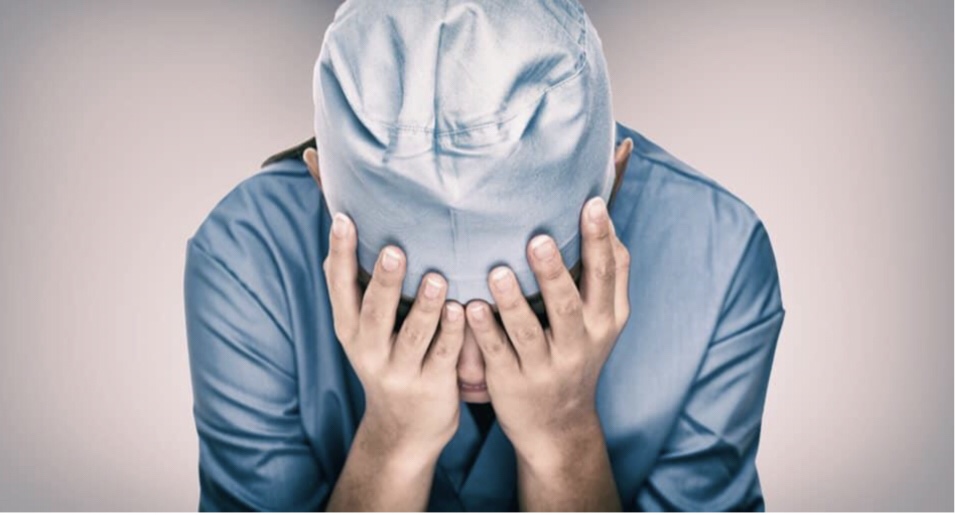
What the COVID19 pandemic revealed about our society.
Reflections from a frontline Critical Care physician.
As I sit and think about recent events, there is certainly much to unpack. I was recently asked about the differences between the H1N1 and COVID19 pandemics. The differences were many, as are the similarities however the biggest difference I’d argue has little to do with the virus itself. A reflection not only of the pandemic, but the social atmosphere in which it was occurring.
Up until COVID, H1N1 was the worst thing that had happened in my career. A long career I might add, that included time working in EMS, during which I saw some of the most unimaginable tragedies. To list them would fill a novel. Let me start off by saying that I was only 16 years old when I saw my first self- inflicted gunshot wound to the head. I have had a front row seat to human suffering for most of my life. With that background in mind, it is notable for me to state COVID was by far the worst tragedy I could ever have imagined.
Remembering H1N1
For those who don’t remember it, H1N1 was certainly a nightmare. The work was endless. The patients were young, and many did not survive. The ones that did survive after weeks upon weeks in intensive care, faced a grueling rehab and a life of limitations including those of a cognitive nature. I recall at the time describing H1N1 as being like a “freight train barreling through.” The illness when severe was virtually unstoppable despite all our best efforts. I have many patient stories but the one that stands out the most is that of a 26-year-old, 5-month pregnant woman. I’ll never forget the conversation with her husband. The moment I had to tell him that I could not save his family. He let out the loudest, most gut-wrenching scream, collapsing in my arms. I swear I can still hear it to this day. We all stood around her in the room while her husband held her hand. I remember trying not to make eye contact with the nurse standing next to me. I knew the moment I did I would start to cry. We both tried to hold it in, but it was no use. For we lost both a mother and a child that day.
An important difference between the two pandemics, beyond simply the scale was public perception. The first wave of H1N1 came in August 2009. At that time, social media sites existed but they certainly weren’t widespread. Social media was NOT the primary source for “news” at that time as it is for many these days. We didn’t see widespread misinformation. We didn’t experience the subsequent hostility and distrust of healthcare workers that we saw so much of during COVID. The atmosphere therefore was dramatically different. I’ve since spoken to many people who were not working in healthcare during H1N1. It’s apparent most weren’t even aware of the severity or for some that it was even occurring at all. I think that drastically influenced the mood of healthcare workers. We were hurt of course by it but nothing close to what the COVID pandemic has done to our profession. Without the hostility, we were free to just do our job which is essentially all any of us want to do. Particularly when the task at hand is grand.
Early Days of COVID
In the early days of COVID, we all had that nervous excitement knowing it was coming our way, but we were naïve as we hadn’t even had our first patient. We were just watching from afar, the cities that were hit before us. That was the period when the world was showing love and respect to healthcare workers. In major cities around the world, people were cheering out of their windows at shift change or holding prayer vigils from the vehicles in hospital parking lots. The best part was all of the free coffee! The world was rallying together in face of this catastrophe. I remember thinking at the time, perhaps the silver lining will be a humanity reset. After this people will be reminded of the spirit of community and what’s most important in life. But in the face of a polarized nation and heated politics, that pendulum shifted rather quickly. In the blink of an eye, the misinformation mounted and with it came intense distrust of the healthcare community. It seemed people could not separate out political ideology and medical decision making. Two things which should always remain separate and distinct were suddenly coupled with disastrous consequences.
There seemed to be no clear cohesive voice, in the absence of that people went searching for any information they could find, no matter how wrong it was. In the era of “click bait” headlines and people wanting their 15 minutes of fame, everyone became an “expert” overnight. The forces that drove messaging were controlled by competing individual agendas of which few were focused on good patient care. We became the villains at a time when we were working harder than we ever had, making extreme sacrifices every day to save lives. All of the hostility produced by political divisions and confusion in our society ultimately filtered down to those of us at the bedside. There is no faster way to crush morale.
Unique Obstacle to Patient Care
Beyond that, it also proved to be a massive barrier to patient care. People became angry when we wouldn’t entertain silly treatments recommended by a “doctor” on Facebook for example. It didn’t matter that we were following the best evidenced based practices. Patients were refusing intubation in essence, risking their own lives because they had read some article about how ventilators kill people or how perhaps doctors were just doing it for money. We even received phone calls from local government officials “representing” their hospitalized constituents. These officials were demanding we provide certain treatments, often many of these were harmful not helpful. At the extreme, we even received a death threat for not giving a “treatment” to a loved one.
As physicians it is a delicate balance, of course we want to honor the wishes and beliefs of our patients. That’s an integral part of medical ethics. However, to be pressured into providing a treatment that in your professional opinion is harmful is something that should never be allowed. “First, do no harm” remember? That’s an oath we all stand by. A perfect example of this principle, a physician can’t just give an addict morphine because they demand it. It may be what that patient desires, but it’s certainly not in their best interest. To do the right thing by our patients we had to withstand this type of intense pressure and work to provide the best care despite it, which is exactly what we did. However, it made an already exceptionally difficult job that much harder. It was truly a bizarre experience.
Expressing Frustration
I looked back at some of the social media posts I made during this time. While admittedly most of what I posted were silly memes, I did manage on occasion to get out some relatively cohesive thoughts. Posting on social media for a physician is a fine line. You must be very careful about what you post online given you are a professional that works in the public eye. As experts our words are often very powerful. We have an obligation to give the most accurate, updated information while remaining neutral. Sadly, during the pandemic not all medical professionals adhered to this ideal. Most did, but a few didn’t. Choosing instead to seek out their own 15 minutes of fame by capitalizing on public fear and flaunting their own “expertise.” That wasn’t me of course, rather I was just simply trying to vent out of extreme frustration. I think lots of us at the time fit that description.
This was one of such posts:
So, I apologize for yet another rant. I do try to hold my tongue but like many of us in healthcare I’m having a very hard time doing that right now. I miss the days of balance and reason. When two people with opposing ideas could have a healthy debate without anger or hysteria. When the “middle” was the majority and not the extreme. This highly polarized world is a very tough one to live in. I often feel like a spectator in the ugliest circus imaginable. The real problem is, it’s happening at a time of true human crisis and immense suffering at the hands of a global pandemic.
Many of the forces at play in fact have nothing to do with health at all yet they vastly affect the decisions we are making. For clarity, I want to express that I do not believe in forcing someone’s hand regarding a choice they make for their own lives. Even if I’m in absolute disagreement. The fact that I even have to express that prior to continuing my rant is a direct reflection of this crazy time in which we live.
I have questioned so many times along this pandemic journey WHY do so many people actually believe these crazy misconceptions about this situation? WHY does a patient dying in front of you from COVID, STILL believe it’s not real? WHY does a patient choose to not believe the actual specialists standing in front of them and instead decide to cling to some nonsense a FB “doctor” posted about what the proper treatment should be? WHY would a critically ill patient at risk of dying actually tell their doctor they don’t want to be intubated because they believe there is some sinister motive behind it? WHY do some family members of the frontline healthcare workers not believe the stories their family members tell when they get home at the end of the shift? Do they REALLY think that their family member is actually conspiring against them? Why would they lie? What do they have to gain? It’s truly mind boggling. Prior to COVID I could never have imagined such a scenario. Never imagined that these were obstacles we would have to face. Thanks to media, social media etc we’ve had a bombardment of information a lot of which is absolutely incorrect. It’s information/opinion overload. Information incidentally about a previously unknown virus, a situation by definition that changes daily as we learn more and more. The complexity of which can’t possibly be explained in a single post. Couple that with the phenomenon of confirmation bias, sprinkle in some anger and hate, a polarized political environment and we have a heck of a mess.
The real tragedy is that lives are at stake. A basic component of health care decision making is that these decisions, while people have the right to decide for themselves, should be based on full and correct information. INFORMED decision, INFORMED consent-this is the benchmark. The simple fact that, for some strange reason, decisions such as getting a vaccine or wearing a mask are now so intimately tied to political ideology, fueled by endless amounts of misinformation are leading people astray. Is this REALLY informed decision making under such circumstances? People need to make a concerted effort to seek out real information while keeping an open mind. We need to de-couple these arguments. For example, it is entirely possible to be against mandates AND still believe getting a vaccine is the right thing to do. Wearing a mask in public doesn’t automatically mean your political ideology leans a certain direction. You can disagree with a certain public policy but at the same believe COVID is a real threat. We’ll never “see the forest through the trees” if we don’t clear our minds of these external forces driving our health decisions. Most importantly we need to insert respect for our fellow man back into the equation…
In many ways I am glad that I had posted so many things during this period. I’m not sure that now I could write the same story as my memory has a dampened version, devoid of the emotion of the time. It’s certainly something that needed to be captured in the moment.
Heroes All Around
It’s difficult to explain fully what COVID was like as it affected us in so many ways. People talk about the discomfort of wearing the PPE which IS true. Having that on your face for hours at a time, unable to even take a drink. It’s hot, its’ exceptionally uncomfortable. We acclimated to it, however, never came to like it of course but acclimated to it as it was present reality. There were occasional times when a non-COVID patient would come in and full PPE wasn’t required. In those rare moments, we all could be seen repeatedly checking ourselves as if “something was missing.” It truly felt as if you were naked.
More importantly, so many personal sacrifices were made. For example, the nurses who volunteered to go serve in NYC or other front-line areas getting hit before we did locally. They of course came home to have to do it all over again in our area. I also recall one of my nursing colleagues asking me if I thought it was time yet for her to separate herself from her young child. In other words, has COVID in our area reached THAT point yet? She was trying to plan on how to keep her family safe while still doing the job. How many parents would be willing to do a job it if meant they had to be completely away from their children for a prolonged period of time? Not many I’m sure yet they did it with absolute dedication and without a second thought. That’s a hero and I was surrounded by them. Examples just like that every day.
Remember, this was also very scary. We didn’t know which time, which patient, what day would be the day we ourselves contracted COVID. It is the reality when working so closely with an unknown virus. We weren’t given the option to try to stay home and be safe. We would talk about getting our affairs in order “just in case.” There was some joking around it of course, that’s how we operate. You must find humor in everything to survive. But the reality and the seriousness of the situation was still there. We were all acutely aware of the fact that our lives were in danger. Yet, everyone still stepped up.
Misinformation
COVID was a previously unknown virus, never before had we seen this in human history. It was exceptionally unpredictable and broke all the rules. Fighting an enemy of this kind was not easy. It meant constant learning, shifting and regrouping. We were frequently collaborating with intensivists in other places as well, comparing notes, learning. The nature of COVID, being unique in so many ways felt to many of us not to be a natural virus. I’m not a conspiracy theorist, but to those of us on the front line fighting it every day, this thing just didn’t fit the natural order. Or so it seemed anyway. That made battling it that much harder.
Because it was a previously unknown virus, there really was so much misinformation, ridiculous amount of misinformation. You couldn’t wake up in the morning as a healthcare worker and not be hit with some other nonsense. Even if you removed yourself from social media, inevitably someone you knew would track you down and try to pick your brain about the latest “news.” Only about half of the time would they be genuinely interested in your take on the subject, the rest of the time they just wanted to pick a fight. Suggesting somehow that you don’t know as much as they do, even though you have 30 years of schooling and training under your belt. One of my “favorites” is the one surrounding mechanical ventilation. Naturally, I wrote another social media post on this subject:
Another BIZARRE and more importantly DANGEROUS consequence of COVID misinformation craziness is this idea that “ventilators kill people” and “doctors only want to intubate to make money.” It’s utter madness! Pre-COVID if there was ever any point of contention around the use of mechanical ventilation, it was often along the lines of entitlement. Some folks demanded we did it even when medically it wasn’t likely to be helpful. Most of that of course is related to a grief response and part of our job is knowing how to navigate that. Clearly, compassionately and fairly. We are very experienced with it no doubt.
However now we are being confronted with the opposite sentiment. The real problem is why? It’s a DIRECT consequence of widespread misinformation. I don’t know how many times I’ve heard patients say NO to mechanical ventilation not because it was a true end of life/goals of care decision but because they saw some report, heard some dumb rumor etc etc. Never thought I’d have to have THIS conversation with such frequency. Some folks are choosing a path to certain death because of some nonsense they read on FB. This is not an exaggeration in the least, THIS is what we are seeing on a regular basis.
FOR THE RECORD:
NO, doctors don’t intubate people just to make money. For a moment I’ll ignore the fact that such a sentiment is EXCEPTIONALLY insulting, questioning the motives of front-line healthcare personnel who are giving EVERYTHING to fighting this pandemic. It’s like this-INTUBATING A COVID 19 PATIENT IS THE SINGLE RISKIEST PROCEDURE WE COULD EVER DO! Working directly with the airway of a person with a potentially deadly respiratory virus carries a high risk of infection for the physician, respiratory therapists, nurses and the entire team in the room. WE DONT WANT TO HAVE TO DO IT, PERIOD! And certainly not for a reimbursement which is minimal. If we are saying “it’s time” to intubate it’s because we are trying to save your life, nothing more nothing less.
Those who are willing to put themselves in harm’s way for their fellow man are heroes worthy of respect. Instead, we find ourselves in the position of having to defend our honor against nonsense. At the same time fighting even harder against these artificially created obstacles to providing good patient care. Think of how frustrating and demoralizing this work has become?
People do sometimes die on mechanical ventilation, not because the “ventilator killed them” but because the illness was severe. severe enough to require mechanical ventilation which by definition means the illness itself is life threatening. The machine didn’t cause it, the illness did. That used to be obvious but now we actually have to explain this. Repeatedly…
For the record, my pleading didn’t work. The misinformation continued
Last Words
Working in a small town also meant many of these folks were people you knew. They were previous patients, friends, family members of friends etc. Often, there were multiple members of the same family. I can recall fathers and sons, mothers and sons, spouses and siblings all admitted down the hall from each other. We lost so many families, complete families. In one case 3 of 5 siblings of the same family were lost. This was the reality of the time.
I think of a particular gentleman who had been a patient of mine years before the pandemic. He survived his first ICU stay in 2009 (non-H1N1). I cared for him then as well as in the office for years following. He unfortunately contracted COVID and I had admitted him to the ICU. In the days prior to his intubation, we joked about what 10 years had done to us both. Having aged, gained weight and such since the time we both first met. He was a very sweet man. When his condition worsened, we spoke in detail about his wishes, spoke at length with his family as well. He knew his chances weren’t great, but he decided to try. When we intubated him, his last words were “I trust you doctor.” He passed the next day. I am very aware that my face is often the last one these patients ever see, my voice is the last they hear. I have heard more “last words” than I care to admit. His family came to the bedside as we withdrew care, visiting from outside the glass of course. That was the reality of saying goodbye during COVID. You couldn’t hold the hand of your loved one as they slipped away. We held their hands instead; it was the best we could do. We put his phone to his ear and his family spoke from outside the glass as he passed. His wife remarked he looked different without his glasses, so I motioned to the nurse to please put them on his face. He was not conscious of course, but wearing glasses was who he was. We needed to honor that. His wife who I also knew, said to him “your favorite doctor is here with you.” With that I had to silently excuse myself to wipe the tears from my eyes. Deep breath, move on to the next…
One analogy I like to use when speaking of COVID experiences is regarding the “9/11 phone calls.” When 9/11 occurred, the recordings of phone calls from passengers in the planes as well as the buildings were released. There were countless messages saying goodbye to loved ones from the people who knew in those final moments their life was coming to an end. With COVID, critically ill patients facing intubation were very awake, unusually so. Once reaching that point, you realize the chance that this individual isn’t going to survive is quite high. We knew if we couldn’t save their life, at least the one thing we could do was ensure they had a chance to speak to loved ones at least one more time. So, as we were preparing to intubate, we handed them their phones. This meant however, we had to bear witness to these goodbyes repeatedly, day after day. Just like listening to those phone calls, messages of love, people taking the time to make sure they say what they need to before they die. Mothers calling their children, siblings, spouses. It was very hard to imagine the fear they must have felt in that moment. The fear and sadness knowing that they could possibly die, their life was perhaps coming to an end. Who would you call and what would say? Many of these people did die, despite doing anything and everything in our power. This aspect was absolutely devastating.
We lost many young people, particularly with delta wave. I lost a 21-year-old girl. She had been away on spring break when she contracted the virus. We did everything we could for her. I’ll never forget speaking to her parents when we were trying to resuscitate her. I went to her mother to explain that there was nothing more we could do, and the resuscitation attempt was coming to an end. She screamed and begged me to keep trying. Of course, we did for a few more minutes, not because we knew it would work but instead for her family’s sake. Eventually I had to stop, I had to tell her mother I’m sorry and walk away. That’s always one of the hardest things to do.
COVID 2.0
With delta wave we really got hit, as did everyone else I suspect. After the first wave we were all exhausted but so grateful to have it behind us. We made it out, barely but we made it. Then, just as you were able to finally stop and take a breath, COVID 2.0 came. Finding the energy to do it AGAIN was exceptionally hard. The resources were really stretched thin. At our peak we had 51 patients on ventilators in an ICU originally built for 26. This was the typical story across most hospital systems. Our extensive planning made it possible for us to pull that off well, but it was a strain for sure. Ensuring we had the necessary resources was a day-to-day affair.
There were times we received patients from out of state. Those rare and fleeting moments when we had an ICU bed available. At this point in the pandemic, people just went to wherever there was an ICU bed with the right capability. I even received a call from an ER in Texas, Texas! That’s several states over. It was a woman with COVID in her 40’s, no other bed available. Unfortunately, she died before getting to the ICU. I can’t help but wonder what would have happened had she made it to us on time.
Resources Are Not Infinite
So many people in this country live under the idea that we will always have what we need when we need it. Why would we think differently, we’ve been spoiled for so long. So many even refused to acknowledge there was a crisis at all. “It’s overblown” or “you’re just trying to scare people, fake news.” Refusing to believe the possibility that medical care might not be there when they need it. Leaving those of us on the front lines shaking our heads. Whatever helps you sleep at night I suppose however I assure you, the concern is very real. Hospital resources are not infinite.
I’ve had the privilege of going on several medical mission trips throughout my career. I think the biggest value is the perspective it gives regarding the blessings we in this country have. So many countries don’t have basic medical care let alone the type of ICU level of care severe COVID requires. The magnitude of the death toll in such places must be even more staggering.
Today I am Angry
The next post that I wrote however gained the most traction. I wrote it on a particularly frustrating day. Dare I call it a breaking point? I had enough of repeatedly watching people die, young healthy people. The day I wrote this I had already lost 3 that morning alone. At this point in the pandemic a vaccine was available. Early in the pandemic, deaths weren’t preventable but now they largely were. Every death felt like such a waste. I challenge anyone to work in such circumstances and NOT feel angry.
Now, before you nay-sayers immediately discount what I am about to say, remember where I am coming from. What I have described above. I am a witness and am here to tell the story as it happened.
TODAY I AM ANGRY:
I am angry that we are back HERE again and this time it’s actually worse. How is that even possible? How much worse will it get? How long will we have to do this?
I am angry that people will choose to believe any random reference that will fit THEIR agenda instead of listening to the people on the very front lines who have been treating COVID for 18 months. WE are the experts. We, the physicians, nurses and health professionals in your own community. We are also your family, your friends and neighbors. We’re NOT lying to you. Why would we? We have no agenda beyond trying to save your life.
I am angry that “science” has become some catch phrase, the majority of people throwing that word around have no idea what it REALLY means. We have to study for YEARS to learn how to properly interpret a research trial, now everyone with a computer, smart device or tv thinks they also suddenly know how as well.
I am angry that I have to see the SAME story on repeat, over and over and over again-“patient diagnosed with COVID last week admitted to the hospital but now with rapidly escalating oxygen requirements. in need of intubation….nothing is working, now with multi-organ failure…passed away today” Move them to the morgue, next patient fills the room within an hour…repeat. Again and again, EVERY SINGLE DAY.
I am angry that despite staying up with the latest data, refining our management and having access to the very best treatments for our patients, the above still happens. Doctors are NOT comfortable with feeling helpless, it goes against everything we know.
I am angry because not 1, not 2 but 3 or more members of the same family have died often within the same week while in my care. I am angry because someone I know from my community has died in my care. I am angry because a family member of someone I know has died in my care. I am angry because other healthcare professionals have died in my care. I am angry because someone’s spouse, child, sibling, parent or friend has died in my care.
I am angry because I’ve lost a 21-year-old, many folks in their 30’s, 40’s and 50’s just in the last couple of weeks. All perfectly healthy, none of which ever dared to dream they would be this sick. Until the day they met me or someone like me on arrival to the ICU. They look at me and ask, “am I going to die” and I’m at a loss for how to answer this question correctly. Because while I may not say it, in my heart I know the answer.
I am angry that I am still listening to people say their final goodbyes to their loved ones as I’m setting up to intubate. On a daily basis.
I am angry that these patients are SO awake, unusually so right up until the moment we put them to sleep because we actually get to know them as the humans they are. We learn their stories, laugh at their jokes, see pictures of their families…then they die. Mine is the last voice they will ever hear.
I am angry that because of this battle, despite doing everything we can to protect ourselves, I like so many of my work family have contracted COVID and…brought it home to our families. And many frontline healthcare professionals around the world have lost their lives. Just doing their job.
I am angry because despite all of this heartache, some still want to accuse us of malfeasance, of intentionally withholding a “cure” that incidentally doesn’t exist.
I AM ANGRY BECAUSE NOW THIS IS PREVENTABLE!!!!!
Confirmation Bias
Thus far, during the pandemic the single biggest controllable predictor as to whether someone becomes critically ill and dies from COVID has been vaccination status. A COVID “naive” individual ie your immune system has no knowledge of this virus from prior exposure (including both natural and vaccine) will have less defenses against it. If you have fewer defenses against it, you are more likely to become seriously ill and die. It’s not exactly rocket science. If that isn’t enough, our patient population as well as what reported from most hospitals show that over 97% of people requiring admission to the ICU are un-vaccinated. These statistics are clear. A vaccinated individual has a significantly lower chance of severe illness. That’s entirely the point. Will a vaccine save your life? THAT is the only question worth asking. Why do doctors recommend vaccines? Because they save lives, largely by preventing severe forms of the illness.
Thanks to the politics tied to the vaccine however, the question changed to “will the vaccine prevent COVID infection 100% of the time?” What vaccine I ask you has ever prevented something 100% of the time? None! Now I ask, did we see mass political upheaval over the fact that it’s still possible to get the flu after receiving the flu vaccine? Of course not! This narrative has been re-framed by factors other than medical science. Why? To create more convenient talking points. Everything was changed to create more convenient talking points. On both sides of the aisle. It was changed to create “click bait.” I’d bet most of us without even realizing we were doing it, also changed the dialogue somehow to fit better with our own narrative. That’s the unfortunate thing about human nature.
Even worse, we chose to only read articles that supported our pre-conceived ideas. The motive for reading said articles became more about winning an argument than it did about learning. Here we are, right back to that pesky phenomenon of confirmation bias.
Political talking points are worthy when speaking on the constitutionality and effectiveness of vaccine mandates but not when speaking on the medical benefits of vaccines themselves. There needs to be an absolute distinction here. How many more died that didn’t need to? I’m not speaking of those who declined the vaccine for TRUE medical reasons or religious beliefs but rather those who refused it out of anger towards the government. I understand the sentiment on the surface but when you break it down as a health strategy, it is very dangerous. Some people even believed that there was microchip being implanted in them, a tracking device of some sort not a vaccine. The social scientists must be having a field day!
Who’s the Real Enemy?
With H1N1 we knew what the enemy was, it was the virus itself. With COVID, it’s not so clear. If we are now forced to name just one enemy, would it be the virus or the human response to it?
All the phenomena surrounding our COVID experience will be spoken of for decades to come. Perhaps one of the beneficial things of being a “COVID insider” working on the frontlines was that it did in fact keep me objective. Like a spectator, seated inside my little bubble called reality, watching the craziest sport imaginable. I just hope the next time around the rules will be more civil.


 Palliative Life
Leave a reply to Diane A. Cancel reply